How it happened!
We’re well underway on our global circumnavigation and there’s no turning back!
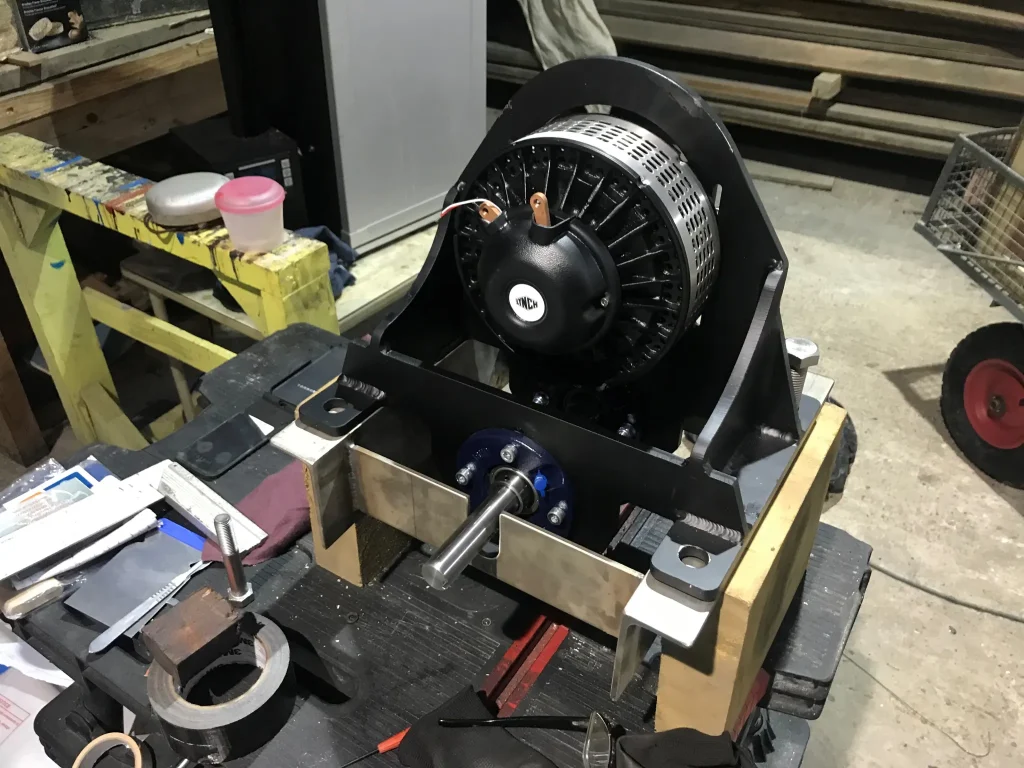
We’d upgraded Ocean Strider inside and out, including removing the Diesel engine and fitting Lynch Marlin 8 kilowatt electric propulsion.
Changing back to diesel crossed my mind on several occasions, as friends and cruisers voiced their concerns, but there was no going back as we couldn’t afford to. We chose electric propulsion, it was as simple as that!
Our journey started from Maryport Marina, near the border of Scotland, on the Solway Firth on the west coast of England. A voyage like this is a one-off adventure in most people’s lives, and my nerves were totally on edge.
A parallel journey into the unknown
Choosing to travel with electric propulsion added another parallel journey into the unknown. I knew little about looking after AGM/VRLA batteries, or what to expect from the electric motor, and I was about to set sail around the world, sailing to places with no local knowledge. Scary to say the least.
I had my Yachtmaster Offshore, but during the last 10 years, our sailing was mainly chartered in the Med, except for a short while around our home in the north.
As we set sail on our voyage, I worried about the range and performance of our electric propulsion. All the different scenarios were sending my head into turmoil.
Would we have enough power for entering harbors and ports, the range for negotiating the long channels, huge tides, and notoriously bad weather on the west coast of the UK and Europe?
Would Ocean Strider have the stamina to cross the English Channel, Bay of Biscay, and the longer crossings from Portugal to the Canaries, Cape Verde, and the Atlantic Ocean to the Caribbean?
What would happen if we were caught in a storm or calm for that matter?
I had so many doubts but this journey was more than a passing ambition. I’d spent my whole life working for this and couldn’t give up. I had my sailing qualifications but was by no means an expert sailor. To make things even harder, in addition, I had the electric propulsion to master and the manufacturer had no advice to offer for a journey like this. We were on our own and had to dig deep.
As the journey progressed, my experience increased and I relaxed into it to enjoy my new home, cruising the sea. My confidence grew with that experience, as I sailed Ocean Strider.
In the initial stages of this voyage, I simply set sail only using Navionics, and rushing to my next destination. My mistake was not actually using the information, which is readily available to any sailor. It took several legs of unnecessary hard sailing before the penny dropped. I had to work a lot harder on my planning.
From here my sailing world changed, the electric propulsion and sailing became easier. This awesome journey started to be everything I hoped it would be.
Weather Apps:
I use the weather app Windy Weather, I’m not saying it’s the best but it works well for me. It gives wind speed and direction, height and times of the swell, direction, speed of the currents, and more. It’s there on my mobile phone or iPad. It gives most of the information needed for planning our start time and the information I needed for sailing each leg.
Battery Monitors:
Ocean Strider has a Victron BMV 700 battery monitor, which was supplied with the electric propulsion package. If you have electric propulsion this piece of equipment is vital.
As you are using the drive it shows the amps being used, and amps still available and will estimate the hours remaining in your battery bank, at the current rate of use.
Navigation Systems:
Navionics is my chosen program for planning a route. Before I start my journey I can check the tides in most areas and some currents. As I’m traveling it shows my boat speed, course, track, and planned journey. Not forgetting the important bolt holes if needed.
This available information allows me to estimate how far I can travel by motor alone, which is the worst-case scenario. My priority is to use the drive as little as possible or not at all at the start, conceiving as much battery power as possible.
Sailing to my destination:
I’ll only start a journey, if from my available information I know I can sail all of it. Only using the motor when I need to.
I can estimate the effect of the current and wind on my journey as I sail and if I chose to motor. The main effect of the electric motor is the range I can travel, purely under the motor.
As I travel I have my Garmin equipment, telling me wind speed and direction and speed through the water.
From the start, I know the limitations of Ocean Strider’s electric propulsion system. In fact, I actually know the worst-case scenario of just motoring, using the drive.
The positive effect of renewable energy.
With solar, wind power, and regeneration which the drive supplies under certain conditions, my situation is always better. This is a huge confidence booster. Even though my range is less than if I had a Diesel engine, it doesn’t matter to me as I have my sails and all the information I need to use them.
The Lynch, air-cooled and brushed electric propulsion has been 100% reliable, and my experience tells me the information I now have is more accurate than if I had a Diesel engine with a fuel gauge.
The whole system cost less than a replacement Diesel engine at the time.
I’ve been writing my blog for almost 2 years and had many positive and very few negative comments.
I’ve purposely not gone down the technical route. My aim has always been to pass on, only my practical experience whilst making this journey. Hopefully, to shorten the learning curve of anyone willing to try electric propulsion.
I’ve made short journeys purely by motor, longer journeys using sail and motor, and crossed oceans all with electric propulsion. My new way of life (cruising) isn’t possible for the majority of sailors as I can choose when I sail. But I know if we make the effort electric propulsion can work for everyone.
Technology will keep moving forward to give us more choices. I believe simple is best.