If you plan to set sail on a circumnavigation, you need to trust a lot of equipment on board your yacht.
I found no used engine I could really trust
My diesel engine was at the end of its life. I spent a long time trying to get a good replacement. I found no used engine I could really trust. My only option was new, and a slightly different model.
I’d been interested in electric propulsion for a while. That led me to Lynch Electric Motors. Lynch was in England and so was I. They were a long-established business with a good strong reputation. I spoke to the managing director Trever Lees. He was very honest and never told me anything just because he wanted to sell me a motor.
No water cooling
I wanted air cooled, robust, and simple. No water cooling. The Lynch Marlin gave me all of this, and the price was very good.
Air cooled electric motors are slightly noisier than water cooled. They are almost silent, with no vibration or fumes.
I lifted my 24hp Marlin with one hand
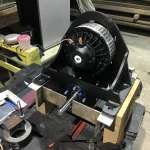
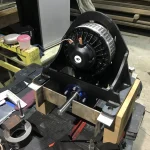
They are small and compact. I lifted my 24hp Marlin onto my boat with one hand (19kg-41.88lbs). The size, weight, and Laque of water cooling made it very easy to fit the electric propulsion system, compared to a replacement diesel engine, that I didn’t trust in the first place. No cranes needed to lift it in.
No fuel lines, cables, raw water connections. If your mounting bracket is well planned and made, you can move the engine into line by hand, no jacks. Just simple connections to your controls and batteries.
The position of your new battery bank is the biggest issue
In most cases, the position of your new battery bank is the biggest issue you will encounter. You will find a place, and, in most cases, you can use the batteries as ballast, to balance your boat.
Long tern running costs are almost free
Service intervals are 3,500 hours for the first service, and no cost if you can perform a simple service yourself. Second service is 7,000 hours, change the brushes. Again, very simple. Long tern running costs are almost free.
Lynch promised a reliable electric propulsion system and that’s exactly what I got. Not one issue, in 6,000 nautical miles, from the border of Scotland in the UK to the Caribbean and more before.
What would I change?
What would I change to make things better? Nothing on the engine or controls. It’s been as perfect as can be.
I would change from AGM to LiFePO4
I have AGM Lead Acid batteries and would change them for LiFePO4. A lot better suited to electric motors in my opinion. Electric propulsion will probably use more power than any other electric equipment on your yacht.
The reason why I would change to LiFePO4 is because they have a huge amount more usable power. AGM should only be taken to 50%, in my opinion 65%. LiFePO4 can go to 20% and more in some cases.
Lifepo4 battery is a superior option
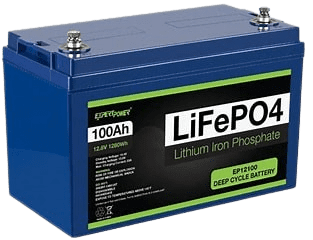
The voltage stays stable on LiFePO4, whereas led acid the voltage drops as you use them, reducing the power output from the electric engine.
You can leave LiFePO4 at a low state of charge for a long while, led acid should always be at 100% or very close. So, if you’re charging with solar, the long wait will not affect a LiFePO4 battery bank.
In conclusion, the Lifepo4 battery is a superior option for many applications. It has a higher energy density, longer cycle life, deeper depth of discharge, lighter weight and smaller size, better safety, and while more expensive, is a more cost-effective option in the long run.